



Strut, Hangers and Supports
- Aug 30, 2016
- 1 min read
Transverse and Longitudinal Restraints
There are two basic types of restraints:
Transverse (T) restraints, which act perpendicular to the pipe.
Longitudinal restraints (L), which act along the pipe.
Transverse and longitudinal restraints may be placed at the same location and designated (TL).
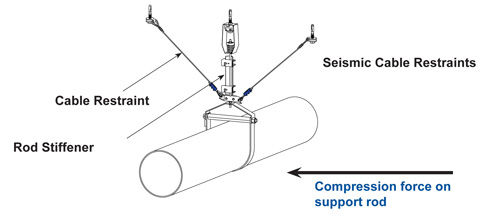
Transverse restraints may be either cables or struts. Although they look similar, they behave very differently in practice. Cables carry only tension loads (cables cannot be pushed). Struts carry both tension and compression loads.
In general, piping restrained by struts will require one strut for each type of restraint at each location. Since they can be fitted to one side only, struts allow for a more narrow packaging arrangement.
An added factor to consider when selecting a restraint system is that once a decision is reached on the type to use for a particular run, code requirements state that the same type of system must be used for the entire run (all cable or all strut).


Comments